Lunch & Learn | Discovering the activities of the External Advisory Board members (session 2)
Joëlle will explain where we are for the fusion energy development in the world and in EU. The technological gaps will be also presented with the associated R&D/industrial strategies to fulfill them. A special focus will be given on the characterization of the radioactive wastes produced in a fusion reactor vs fission and lessons learnt from the ITER licensing process. The European fusion roadmap comprises the construction of a fusion pilot plant within the next decade to qualify the vital systems for the future fusion power plant.
The management of spent nuclear fuel (SNF) represents a major industrial challenge within the broader handling of high level waste (HLW). Although SNF may remain in storage for extended periods before conditioning or final disposal decisions are made, its heat generating nature, long lived radionuclides and potential for criticality demand careful control throughout drying, handling, transport, and interim or final storage. While these aspects are familiar to professionals in radioactive waste management, the specific behaviour and degradation mechanisms of fuel assemblies are very specific, introducing additional complexities that are less widely known.
This contribution presents a real industrial case addressing spalling—a potential cladding degradation mechanism. Affected fuel rods still meet discharge integrity criteria and comply with cask/container safety functions (heat removal, criticality, shielding) at reactor shutdown, yet their condition can evolve toward failure during subsequent dry storage or transport operations. Understanding and managing this hidden degradation envelope is key to ensuring long term fuel integrity.
The presentation outlines how an integrated engineering and R&D programme was used to solve this challenge by:
i) Predicting the occurrence of spalling using inspections, material characterisation, and thermo mechanical simulations;
ii) Defining safe operational thresholds to prevent progression to failure, supported by engineering analyses and experimental campaigns on irradiated and unirradiated materials; and
iii) Licensing a robust SNF classification methodology suitable for industrial deployment and regulatory assessment.
This case demonstrates how advanced applied research, combined with practical engineering, can deliver an optimised and safe solution to a real world industrial problem in managing spent fuel considered as HLW.
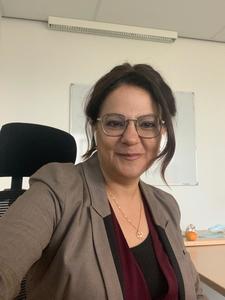
Before joining EUROfusion, Joëlle held a pivotal leadership role at ITER, serving as Head of the Nuclear Safety and Licensing Division. In this capacity, she was responsible for navigating one of the most complex international nuclear licensing frameworks, ensuring ITER’s compliance with French nuclear regulations and supporting the project’s safety case development from early design stages to licensing milestones.
With a solid background in nuclear engineering, safety governance, and high-impact project management, Joëlle has more than two decades of experience in the fusion energy domain. She is particularly engaged in fostering innovation pathways that make fusion a viable, regulated, and societally accepted energy source for the future.

From the very beginning of her career at ENUSA Industrias Avanzadas, Cristina has been involved in every stage of the nuclear fuel lifecycle—from component supply to final storage. Her more than 30 years’ experience spans fuel design, manufacturing, performance assessment, and licensing activities across several European countries supported by her knowledge on the fuel safety functions from front to back-end.
All of this has been supported by her leadership in R&D projects carried out with national and international partners, consistently focused on solving industrial challenges and advancing practical, technically robust solutions.
This background equips her to provide the EURAD-2 EAB with independent, evidence based judgement, ensuring recommendations that are technically robust, risk informed, and feasible for implementation across the nuclear lifecycle.
She also represents ENUSA in the SNETP (Sustainable Nuclear Energy Technology Platform), the OECD/NEA SCIP V (Studsvik Cladding Integrity Program), the European Industrial Alliance on SMR, the Spanish National Platform for R&D in Radiological Protection (PEPRI), and the Spanish Nuclear Fission R&D Platform (CEIDEN), where she acts as Program Leader for the ATF Program.
